In modern brewing, body and foam stability are no longer side effects – they are design choices. Brewers today are constantly balancing. Drinkability versus fullness. Attenuation against mouthfeel. Structure as opposed to flavour. Two tools often used for this are dextrin malt and caramel (or crystal) malt. While they can deliver similar results in terms of body and foam, they work in fundamentally different ways. Understanding the difference of dextrin vs caramel malt allows for much more precise recipe design.
What is dextrin malt?
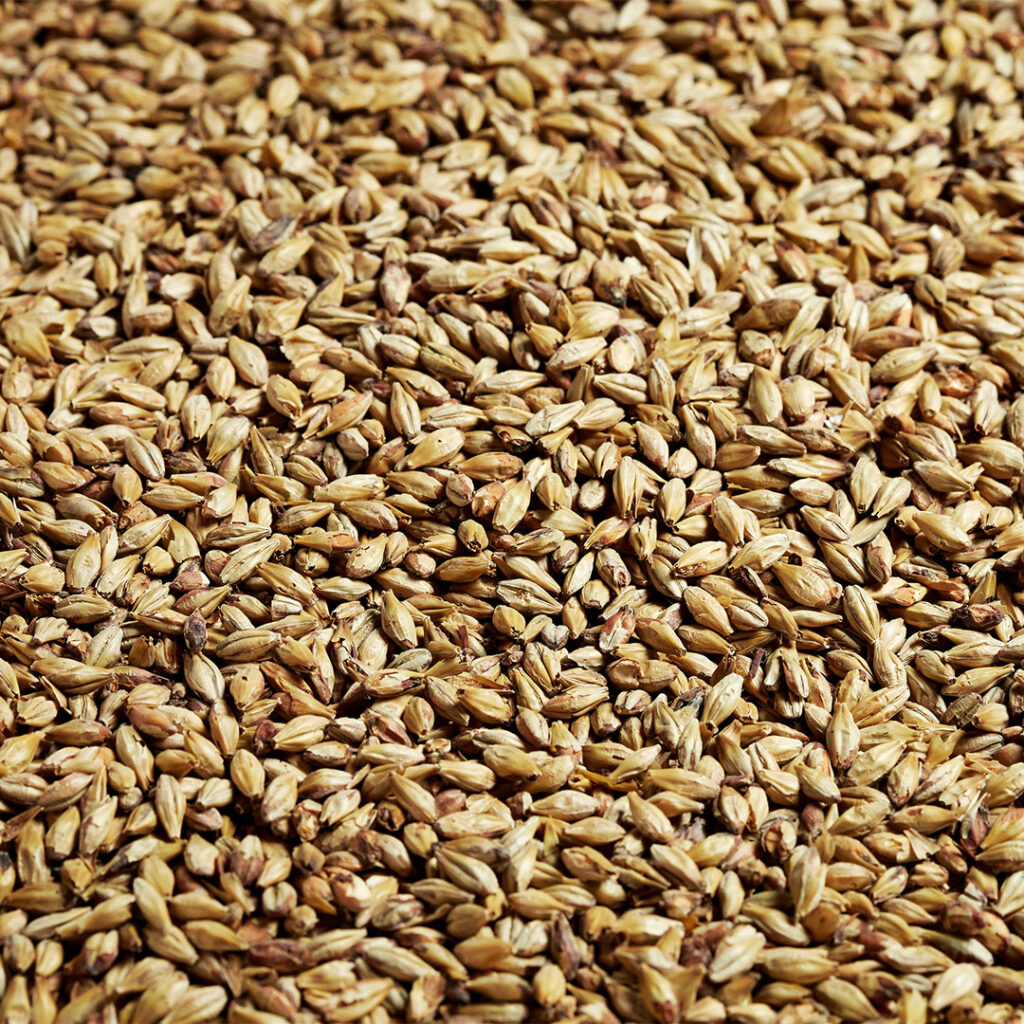
Dextrin malt – such as Platinum Swaen© Dextrin – is designed as a functional, structural ingredient. During production, green malt is stewed at controlled temperatures, allowing enzymes to convert starch into dextrins inside the kernel. The malt is then gently dried to preserve these compounds while minimizing colour and flavour development.
Result
- High levels of largely unfermentable dextrins.
- Very low colour (≈ 3–6 EBC).
- Neutral flavour profile.
- Low enzymatic power (requires base malt).
These dextrins largely survive fermentation and remain in the final beer, increasing viscosity, mouthfeel and foam stability, without significantly affecting flavour, colour or alcohol levels. Beers brewed with dextrin malt tend to feel cleaner, more structured and fuller without added sweetness.
Typical usage
- 3–5% → subtle increase in body and foam.
- 5–10% → clear improvement in mouthfeel and head retention.
- 10–15% → for low/no-alcohol beers requiring additional structure.
Dextrin malt is particularly effective in highly attenuated lagers, low- and non-alcoholic beers, and hop-forward beers where structure is needed without flavour interference.
What is caramel malt?
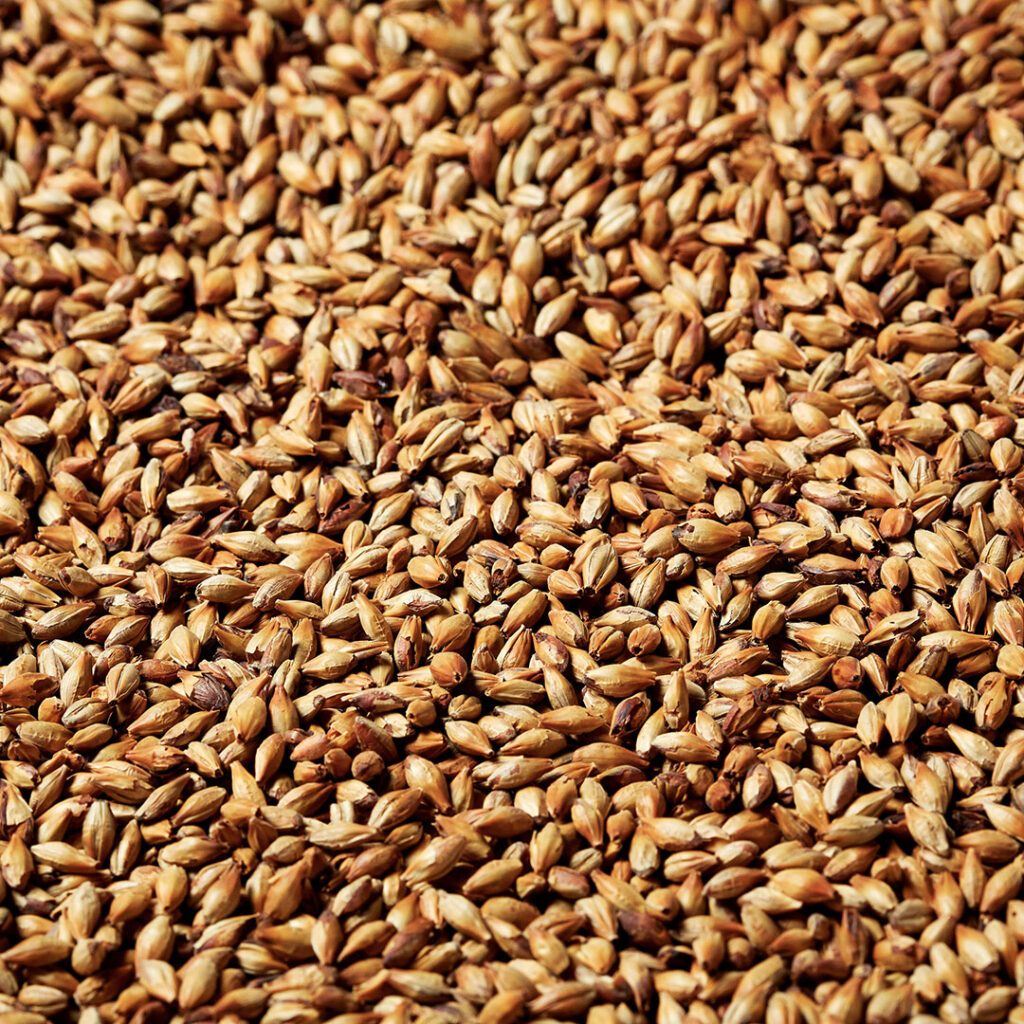
Caramel malt – also known as crystal or cara malt – is both a functional and flavour-active ingredient. Production differs significantly from dextrin malt. After germination, the green malt undergoes saccharification (≈ 60–80°C) and caramelisation (>120°C). This process requires precise control of moisture, temperature, and time, typically achieved in a drum roaster to ensure full and homogeneous conversion.
Result
- A mix of fermentable and unfermentable sugars.
- Caramelised compounds.
- Maillard reaction products.
As a result, caramel malt contributes body and foam stability, colour (10–450 EBC range), and flavour (from light toffee to dark dried fruit). It’s important to highlight that light caramel malts, such as Gold Swaen© Light, are not only flavour malts. At typical brewing dosages, they act very effectively as body enhancers and foam stabilisers, without making the beer noticeably sweet.
At lower colour ranges (≈ 10–20 EBC), their contribution is subtle, supportive, and structurally relevant. Beers brewed with light caramel malt tend to feel rounder, slightly softer and more integrated, even when final gravity is similar.
Typical usage
- 3–8% → improved body and foam, minimal flavour impact.
- 8–15% → increased fullness with mild caramel complexity.
The key difference: structure vs structure and flavour
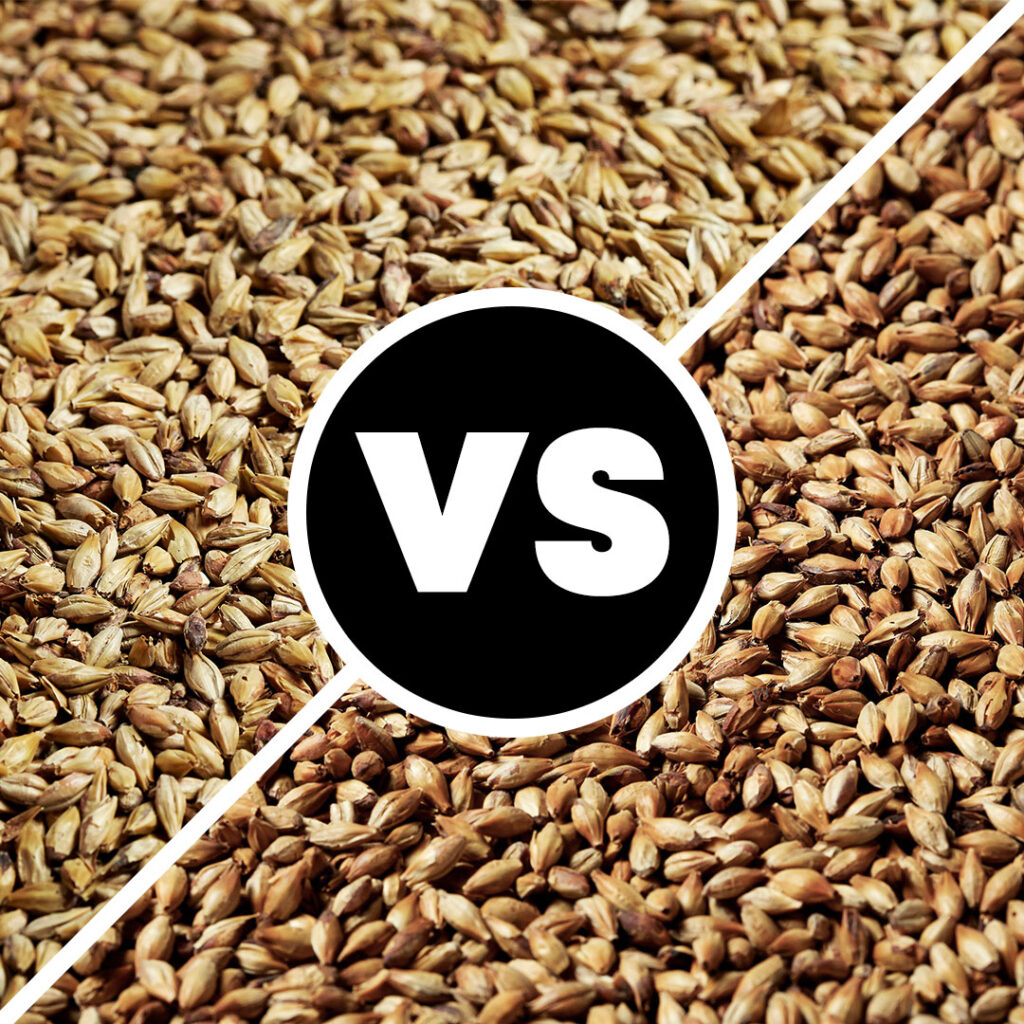
Both malts can improve body and foam – but their intent and mechanism differ.
| Feature | Platinum Swaen© Dextrin | Gold Swaen© Light |
| Colour contribution | Very low (3–6 EBC). | Low (10–20 EBC). |
| Flavour impact | Low, neutral. | Low, neutral in lower dosages. Slight sweet toffee in medium to high dosages. |
| Main function | Structural. | Structural and flavour. |
| Sugar composition | Mostly unfermentable dextrins. | Mostly unfermentable caramel. |
| Sensory effect | Clean, firm body. | Round, integrated body. |
| Typical dosage | 3–15% | 3–15% |
Can you replace one with the other?
Yes – but only to a certain extent. Light caramel malts and dextrin malt overlap in functionality. Both improve foam stability and enhance mouthfeel. However, they are not identical tools.
Choose dextrin malt when:
- Colour must remain minimal.
- Flavour neutrality is critical.
- You want to increase body without affecting profile.
Choose light caramel malt when:
- Slight malt depth is welcome.
- A rounder mouthfeel is desired.
- Colour increase is acceptable.
Important nuance
Light caramel malts can contribute significant unfermentable material — but always alongside fermentable sugars and flavour compounds. Dextrin malt, on the other hand, is a more precise structural tool, with minimal sensory interference.
Dextrin malt and light caramel malts are often positioned as alternatives. In reality, they are complementary. Dextrin malt builds structure and light caramel malt builds structure and integrates flavour. Used together, they allow brewers to fine-tune body, foam, balance and drinkability, with much greater control.
Dextrin vs caramel malt – practical takeaway
- Need foam and body without affecting any colour? Choose Platinum Swaen© Dextrin.
- Want to enhance body while adding subtle depth? Pick Gold Swaen© Light.
- Want maximum control? Use both, each for its specific role.
Not sure whether to reach for dextrin malt or caramel malt in your next recipe? Both build body and foam – but in different ways. Discover Platinum Swaen© Dextrin or explore Gold Swaen© Light – or contact our team to find the right balance for your brew.