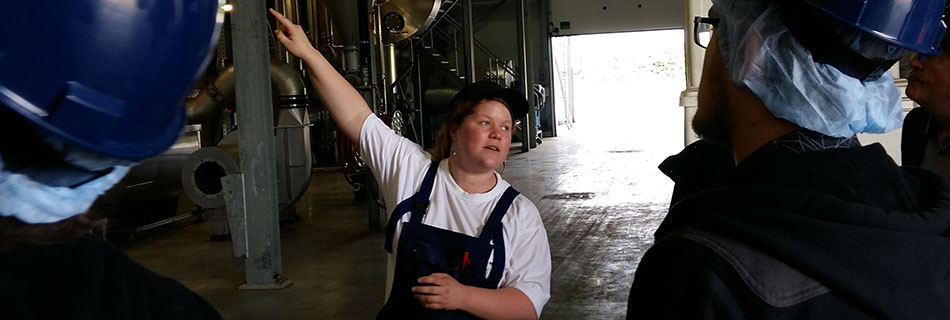
Some people have a special bond with The Swaen. That’s why we asked around to see what they had to tell. In a series of interviews you will get to know the company through the eyes of our staff, former employees, customers old and new, distributors and even some legends of the business. It’s time to talk with Riet, our former head of production and laboratory. This is Celebrating The Swaen with Riet Scheire.
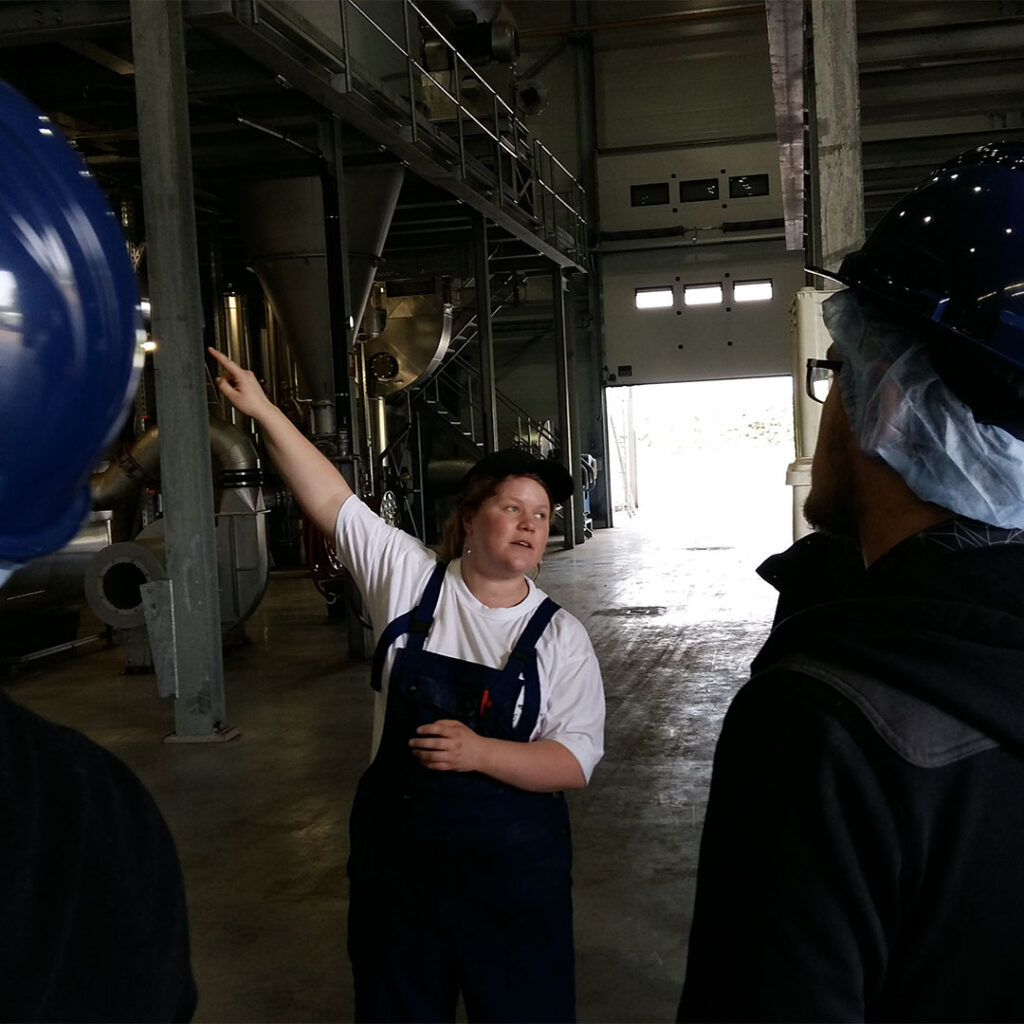
When did you first hear about The Swaen?
On the tram, on my way back to my student room, just after my final exam in January. I received a call from a German number, and a Dutch man had left a message on my voicemail. At first, I thought it was spam. For some reason, I kept listening, and when I heard it was about a malthouse (but where on earth is Kloosterzande?), I thought it was very targeted spam.
As it turned out, my name was on a list of Industrial Biochemistry Engineering students who were graduating that year, and The Swaen found that interesting. But why me, I wondered? At the time, I lived in a street called “Mouterijstraat” (Malthouse Street). They thought that was such a nice coincidence that I was the first person on the list they called. So, I couldn’t really pass that up.
Do you remember your first day at The Swaen?
Absolutely! It was 2 March 2015, the day before my birthday. On my very first day, I was already thinking about how I would treat my colleagues on my second day.
How would you characterise The Swaen in one sentence?
I’ve been away for a while now, and a lot has changed since then, but I can sum up The Swaen in two words: passion and craftsmanship.
How would you describe the culture in one sentence?
Coming onto The Swaen site always felt a bit like coming home, and I still miss it. There’s a very warm, welcoming, and family-like atmosphere. Of course, there are disagreements from time to time, but that’s part of any family, isn’t it? People work hard, with great passion for the craft and a lot of respect for one another.
Which moment has stayed with you the most?
I had been working there for about two years when I had a small project of my own. In collaboration with a few partners, I malted Dutch Sorghum as a trial. I really wanted to do it well, so I gave it my all. After germination, the grain had to be kilned. This was around 2017, so there wasn’t a separate kiln yet –everything was done in combined germination–kilning units.
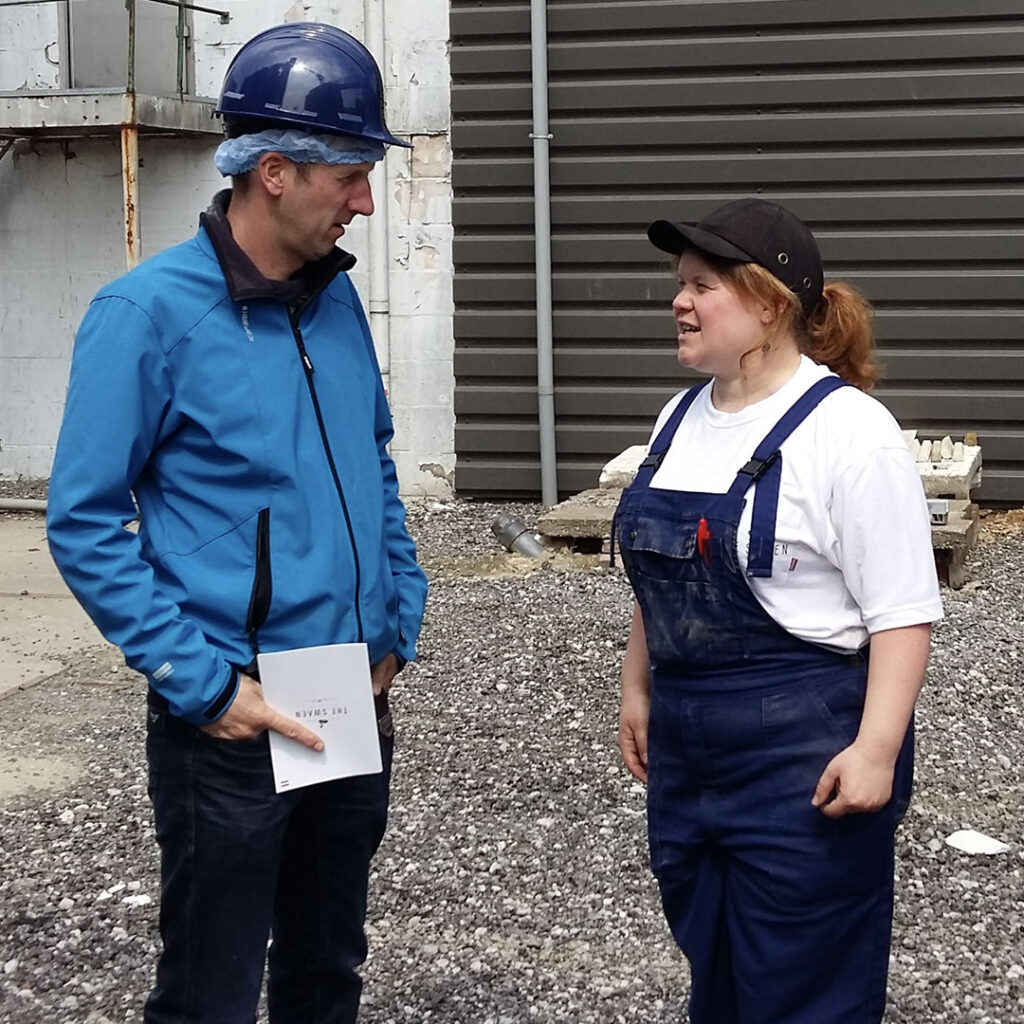
I went to a germination box that was already in the kilning phase to bury my bags of germinated Sorghum in the kilning barley. Since the kilning process had already been running for over 16 hours, the barley had settled quite a bit, and (given my height) I couldn’t reach it properly from the side. No problem, I thought – I’ll just jump in! So I did. I neatly buried the bags. But it was very hot at the back of that unit. So I tried to climb out. Oops. That didn’t go very smoothly – I couldn’t get out. I couldn’t push myself up on the grain, as I kept sinking into it.
I didn’t have a ladder with me, but I did have my phone. However… inside a reinforced concrete unit, there was no signal. Panic! I was stuck and couldn’t reach anyone. About fifteen minutes later, my colleague John came looking for me, wondering why I was taking so long. I only had to bury a few bags, after all. When John reached the unit, he first burst out laughing. I was red as a tomato. It probably wasn’t my smartest move to jump all the way into the back without a backup plan. He saw I had been there for a while and went to fetch a ladder.
The guys laughed about that for a long time…
What perfectly shows what The Swaen stands for?
I think my story shows that quite well. Because I was gone longer than expected, my colleague came to look for me. That’s caring for each other, isn’t it?
What is The Swaen’s greatest strength?
The passion for the craft, which leads to excellent quality.
What is the most important development you have experienced?
I arrived as a complete beginner, fresh out of school. But I was given so many opportunities and allowed to do so much that in four years, I gained the kind of experience you might take ten years to build elsewhere. I learned about the product, but especially about people and about improvising when there are limited resources and too few hands for the work that needs to be done.
What sets The Swaen apart from other malthouses?
Many of the people working there went through years with limited staff and resources, yet a lot of work to be done. Together, we learned how combining our strengths can move mountains. We became inventive and learned to truly work as a team.
Which roles have you had?
To learn about the product, I started in the lab, and then set up the bagging line, where I went from zero sacks per hour to 15 tonnes per hour. I also became a forklift driver to move finished pallets off the line. Afterwards I worked in the roaster as well and contributed to product development. Later, I became supervisor of the roastery and bagging department, and eventually ended up as head of production and laboratory.
I also attended trade fairs (sometimes on my own), stood in barley fields with farmers to assess the harvest, and spent summer days at the harbour helping farmers unload. It’s easier to ask which role I didn’t have. 😉
What did an average working day look like?
That changed a lot over the years. Towards the end, a typical day looked something like this. I started in the office, checking for any relevant updates. Then I went to the lab to assess samples from the germination boxes and measure moisture levels. After that, I made a round of all the germination units to monitor progress.
I also checked the water treatment system to see how things were running, emptied the previous day’s sample jars, and took new samples for lab analysis. Then I visited the roaster for a short discussion and to review the latest specialty malts. I also stopped by the bagging department to make sure everything had started up smoothly. Back in the office, I handled administration from the previous day, made schedules, and worked through my emails. The rest of the day was a mix of office work, small technical adjustments, and helping to find solutions where problems arose.
Which moment made you proud to work here?
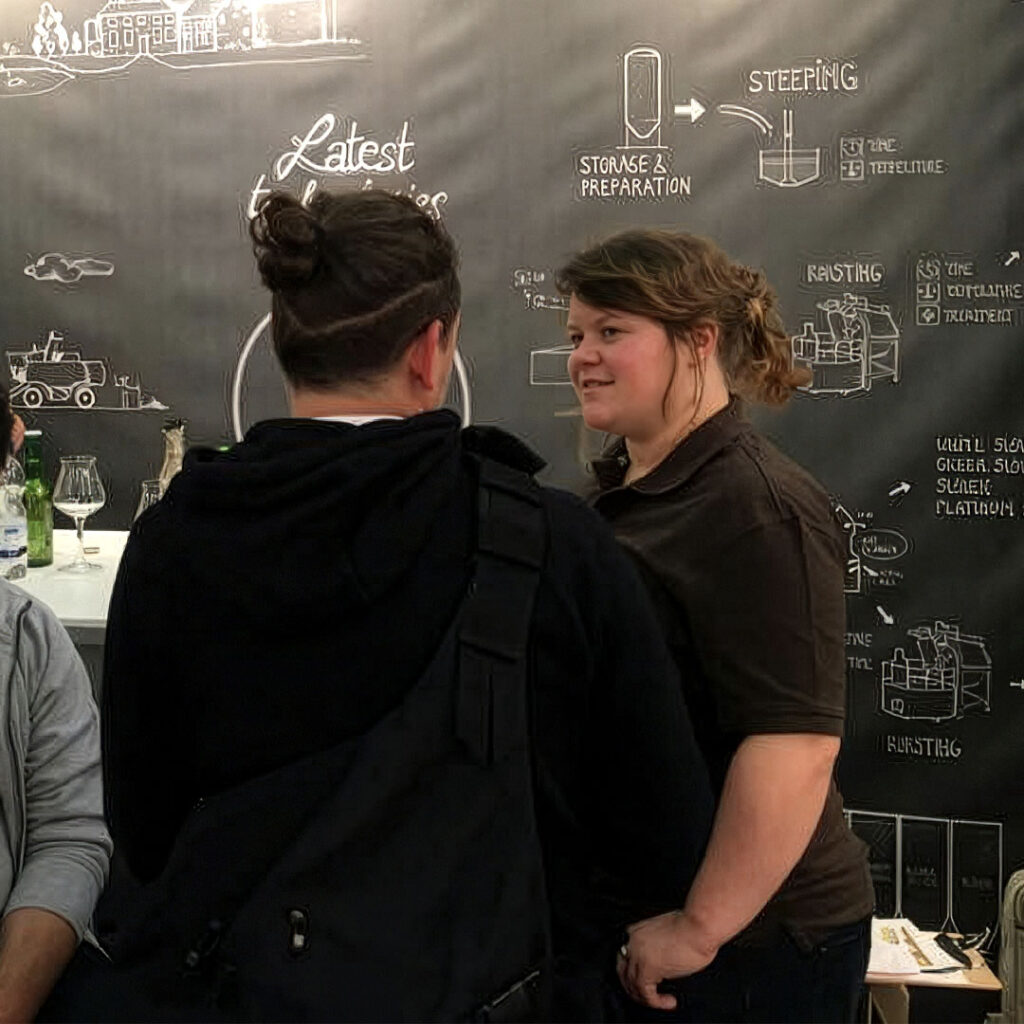
There isn’t just one moment, but I always enjoyed attending trade fairs because you could see how much customers appreciated our product.
Which period was the most challenging, and why?
I don’t think there was a single week that wasn’t challenging – but that’s exactly what I enjoyed! The biggest challenge was when production didn’t run smoothly, yet no additional resources or staff could be deployed. “Making do with what you have” was pretty much the motto of my job.
What do you think is crucial to remain relevant as a malthouse?
Always put product quality first. Many malthouses continue to develop products that, in my view, aren’t relevant. Honestly, who is waiting for malt enriched with thyme or gingerbread cookies? No one, right? What will always matter is product quality.
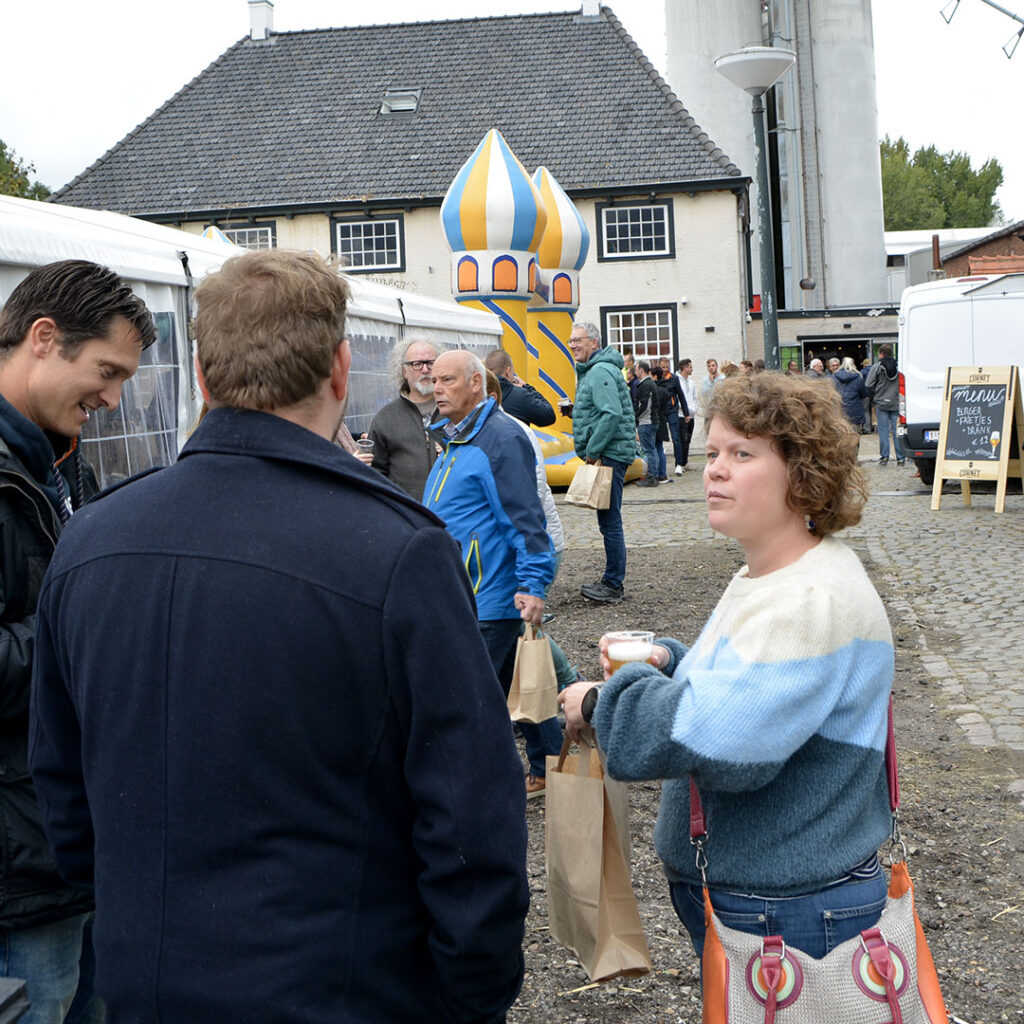
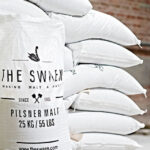
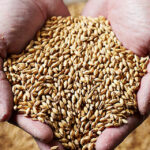
What we could really showcase at trade fairs was how clean our malt was. Very few broken kernels, very little loose husk. You’d open a bag and see beautiful, whole kernels, evenly coloured. You’d taste a wide palette of flavours in every malt. That attracted far more attention than malthouses presenting yet another unusual flavour. I remember a period when we couldn’t supply enough pilsner malt. To keep serving our major customers, we had to collaborate with other malthouses. That led to complaints. The quality of the latest delivery “wasn’t what they were used to”. And that was true – we hadn’t produced that malt ourselves. To this day, I still speak with customers I knew personally about the superior quality The Swaen delivered.
What do you miss about working at The Swaen?
The close collaboration I had with some colleagues – we were a great team.
What would you like to pass on to new colleagues?
Whatever your role, try to connect with the product. That connection leads to passion. Step away from your desk, leave your screen behind, and go to the germination units. Take in the aromas, run your hands through the germinating grains, study them, and see what products are made from them. Malt is such a fantastic product!
From jumping into a germination box to heading up production and the laboratory – Riet Scheire’s story is one of passion, craftsmanship and teamwork. Want to know more about the people and quality behind The Swaen? Read more stories or get in touch — we’d love to hear from you.