There is a version of every dark beer that is too harsh. The bitterness arrives early and sits at the back of the palate long after the last sip. The coffee note is not coffee – it is closer to the smell of a burnt pot left too long on the stove. The body is thin where it should be round. Most of the time, this is due to an overuse of roasted malt, not a problem with roasted malt itself. However, it can also be from the specific roasting equipment that was used. Time to use layered roast in your recipe.
The instinct, when brewing a Porter or a Stout, is to reach for the darkest malt on the shelf and use enough of it to hit the colour target. It works, in the sense that the EBC or SRM reading comes out right. What it does not always deliver is the complexity and the smoothness that define the best dark beers. For that, the grist needs layers – and the layers need to be chosen carefully.
Why single-malt roasting creates problems
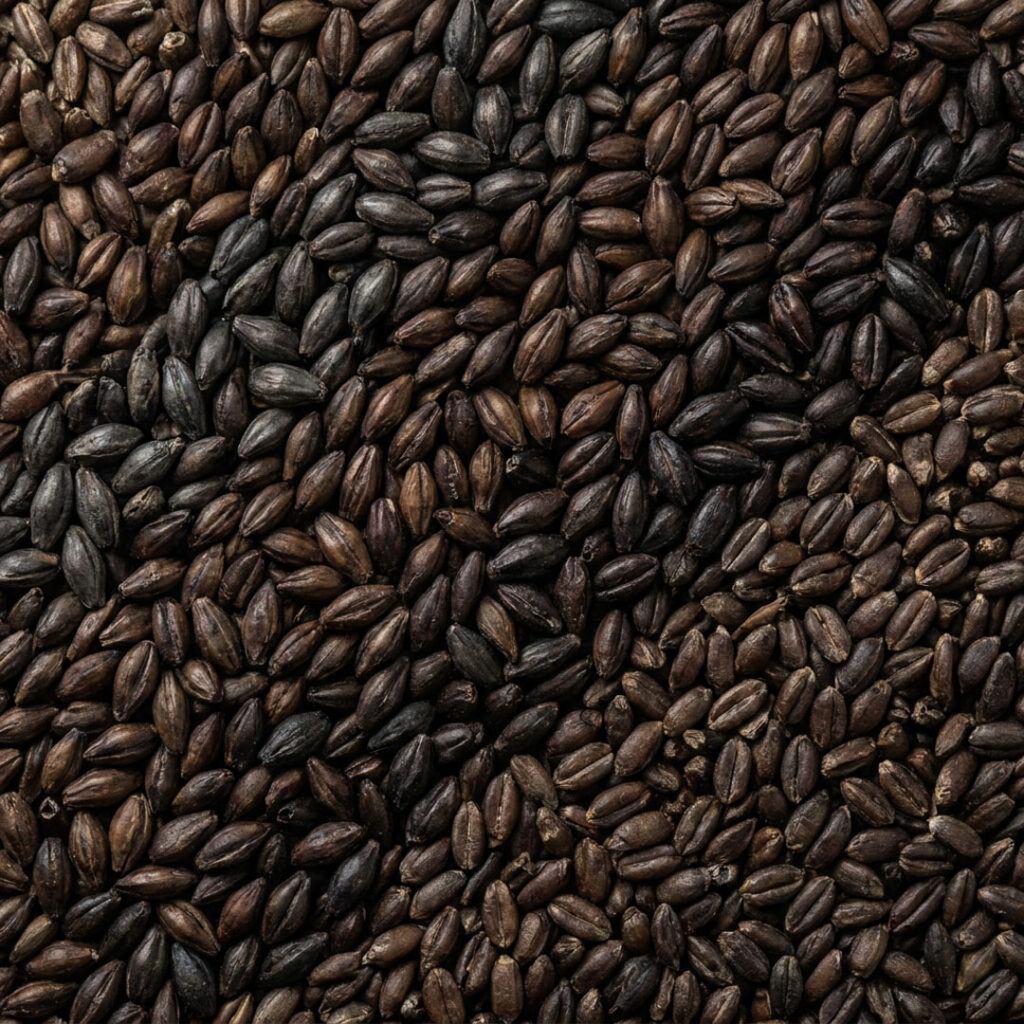
Roasted barley at 6% of a grist will hit a colour target in a dry Irish stout. It will also deliver a sharp, dry, acrid edge that – done well – is part of the style’s character. In a Porter, or a Milk Stout, or a Schwarzbier, that edge is not part of the character. It is a defect.
The problem is the roasting curve, and the equipment that drives it. The Maillard reactions and pyrolysis that produce dark colour accelerate sharply above 220°C. Below that temperature, the compounds produced are complex – roasty, chocolatey, coffee-like in the positive sense. Above it, the reactions can push further into compounds that are simply bitter: polyphenols released from the husk, acrolein from lipid pyrolysis, and the harsh tannins that make a dark beer astringent rather than dry. In older drum roasters and the kilns that preceded them, heat distribution is uneven. Some kernels scorch while others lag behind. The harshness in a finished dark malt is often the contribution of that minority of overdone grain.
Why our roasted malts taste different
This is where The Swaen’s Probat drum roaster does its quiet work. Tailor-made for our malthouse, with a capacity of four metric tonnes, it is the largest of its kind in the malting industry. Perfect temperature control, even heat distribution, and the internal blades that keep every kernel in continuous motion mean the whole batch reaches the target colour together. No hot spots. No scorched margin. The pyrolysis compounds that drive astringency are reduced at source. The result, even at the deepest colours, is a roasted malt with less of the harsh edge that historically drove maltsters to develop dehusking as a workaround.
The layered roast approach still matters – because no single malt, however cleanly roasted, can carry the full colour and flavour load of a complex dark beer alone. But the baseline harshness a brewer has to design around with Black Swaen© malts is already lower than the dark-malt averages many recipe guides were written against.
What layered roast actually means
A layered roast grist does not use one roasted malt at a high rate. It uses two, three, or sometimes four roasted malts at lower individual rates, each contributing colour and flavour from a different point on the roasting curve.
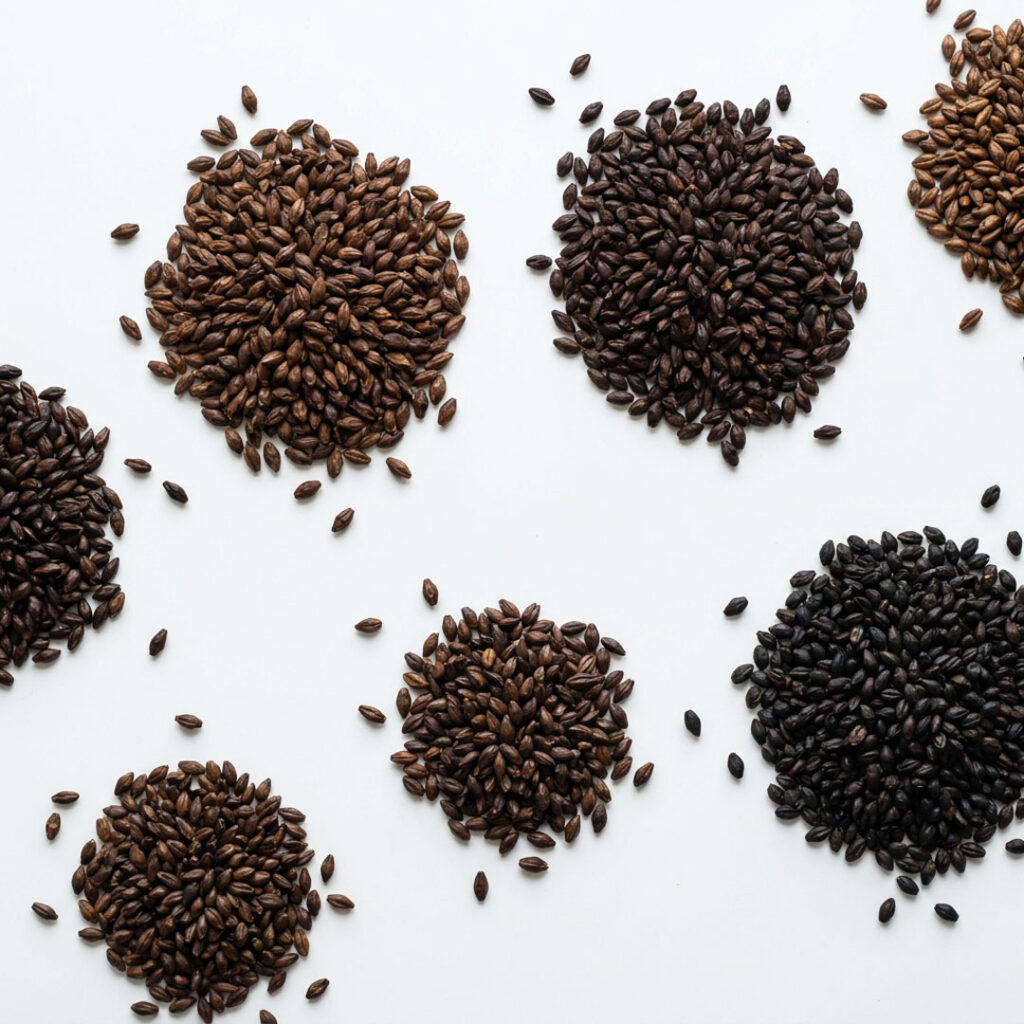
Consider a robust Porter. A single-malt approach might use chocolate malt at 8%. A layered roast approach might instead use:
- Black Swaen© Chocolate B (EBC 800–1000) at 3–4% – The foundation of the dark colour, bringing coffee and dark chocolate.
- Swaen© Melany (EBC 60–80) at 4–5% – A kilned malt that adds biscuit, dry bread crust, and a warming mid-palate note with no sharp edge.
- Black Swaen© Black Extra (EBC 1250–1400) at 1–2% – The deepest colour correction in our range, used sparingly to land the EBC target with a clean, dry finish.
The total colour contribution from three malts at lower rates can match or exceed what 8% of a single dark malt would produce. The flavour profile does not match it – it exceeds it. Each malt contributes a distinct aromatic register, and together they build a profile that is more complex, more rounded, and significantly less harsh than the single-malt shortcut delivers.
Six malts to know in the Black Swaen© range
Understanding the layered roast approach requires a working knowledge of what each roasted malt actually contributes – not just the colour number, but the flavour character behind it. The six Black Swaen© malts below are the ones a dark-beer brewer should know first. Each one comes off the same Probat drum, evenly roasted, with the astringency baseline already pulled down by the equipment.
Black Swaen© Honey Biscuit (EBC 80–90)
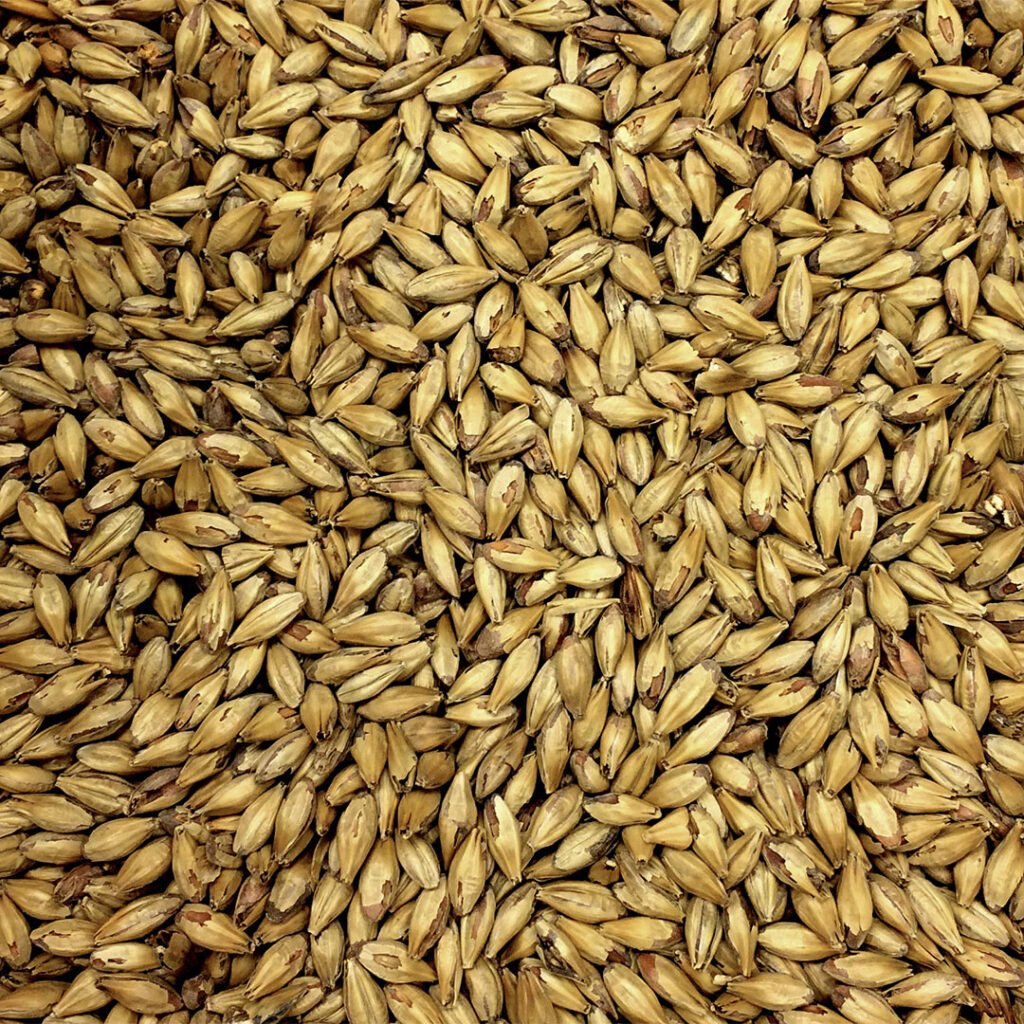
A malt unique to The Swaen, and one that does not fit any other maltster’s catalogue. Black Swaen© Honey Biscuit combines the lightly toasted biscuit note of a low-roast malt with sweet malty and gentle honey aromatics, rounded off with a subtle hint of fresh bread. It is the rare roasted malt that can sit in a Pilsner, a Kölsch, or a light Ale without throwing the style off balance.
In dark beers – Porters, Milk Stouts, dark Belgian Ales – Honey Biscuit at 5–10% builds the gentle sweetness that the heavier roasted malts cannot deliver on their own. It is also the natural partner for Coffee or Chocolate B in any grist where the brewer wants the dark character softened from below.
Black Swaen© Coffee (EBC 500–800)
The mid-roast workhorse. Black Swaen© Coffee delivers exactly what the name promises – a rich, true coffee character – alongside nutty and creamy notes that round out the flavour rather than driving it toward bitterness. At 4–10%, it carries the primary dark flavour in a Stout, Porter, Scottish Ale, or dark Belgian beer without the assertive edge that some chocolate or black malts can bring.
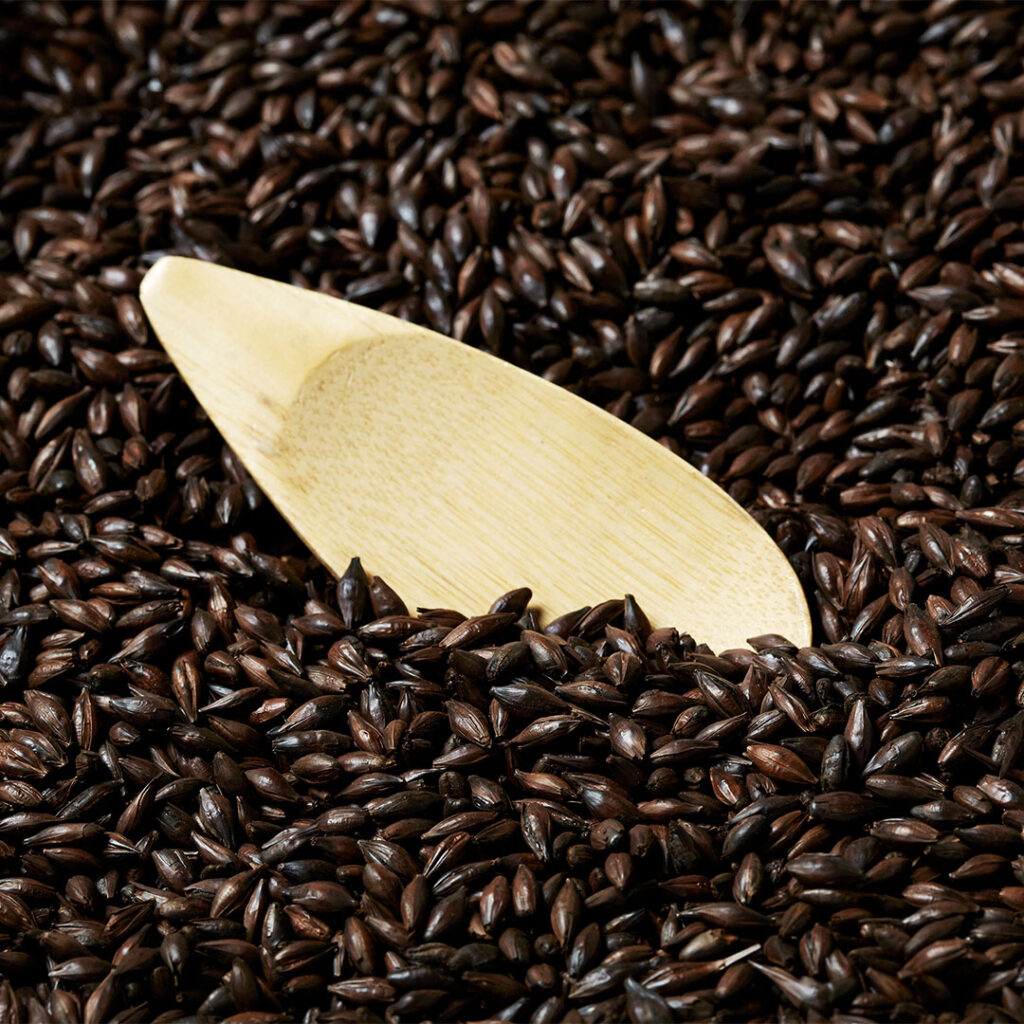
In Milk and Sweet Stouts, Coffee is often the right answer where a brewer might once have reached for chocolate malt: the sweetness of the lactose sits beautifully against the soft, creamy coffee note rather than fighting a sharper bitterness.
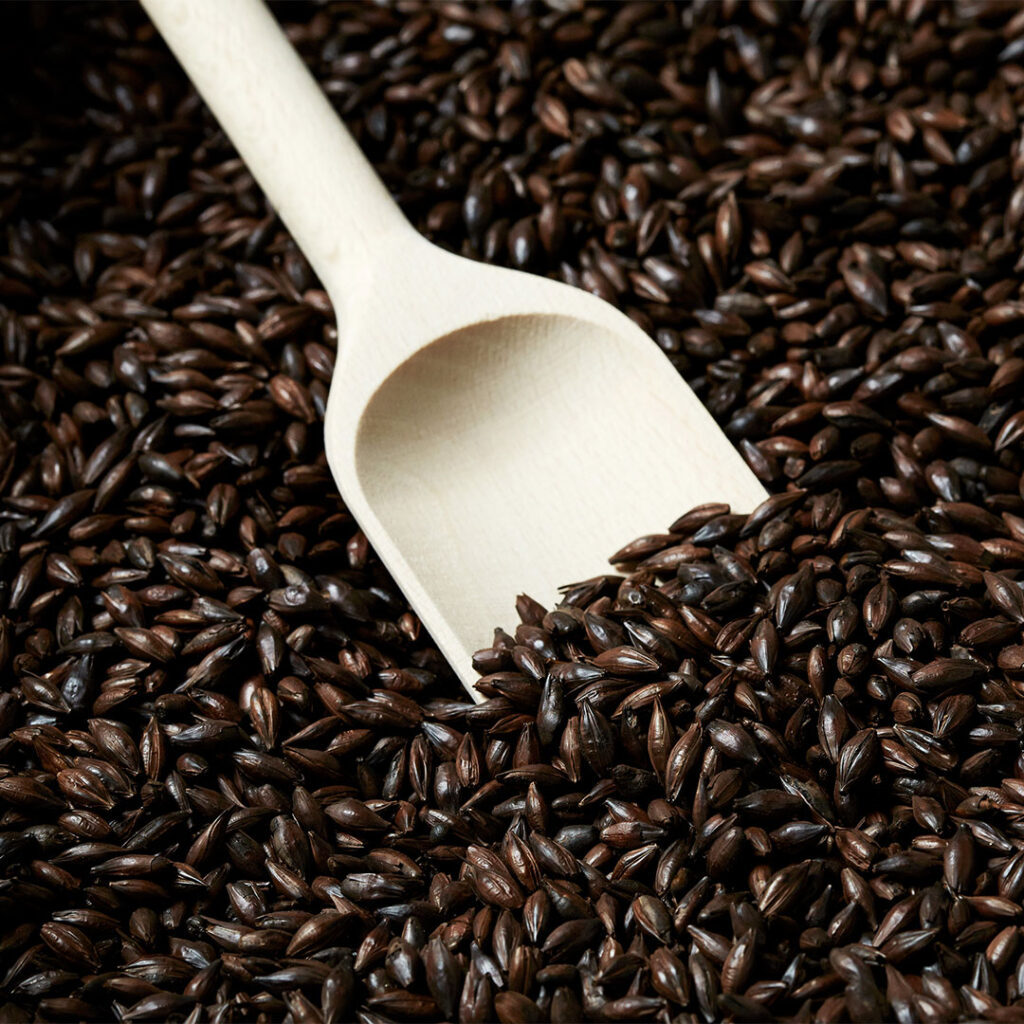
Black Swaen© Chocolate B (EBC 800–1000)
The classic chocolate-malt position in the Black Swaen© range, made from roasted barley malt. Black Swaen© Chocolate B delivers the full cocoa-and-coffee profile that most drinkers associate with Stouts and Porters – bitter, complex, slightly dry, with layers of nutty, toasted chocolate. At 3–5% in a layered roast grist, it provides the primary dark flavour contribution while the deeper malts handle colour correction.
Where older or harsher chocolate malts from other maltsters might need to be used sparingly, Chocolate B’s Probat-roasted profile lets it stand a little more confidently in the recipe.
Black Swaen© Chocolate Wheat (EBC 800–1000)
The wheat-malt-based equivalent of Chocolate B – and the answer to a question The Swaen quietly resolved years ago. The brewing industry’s older response to harsh dark malts was to dehusk barley before roasting, stripping out the husk-derived tannins that drove much of the astringency.
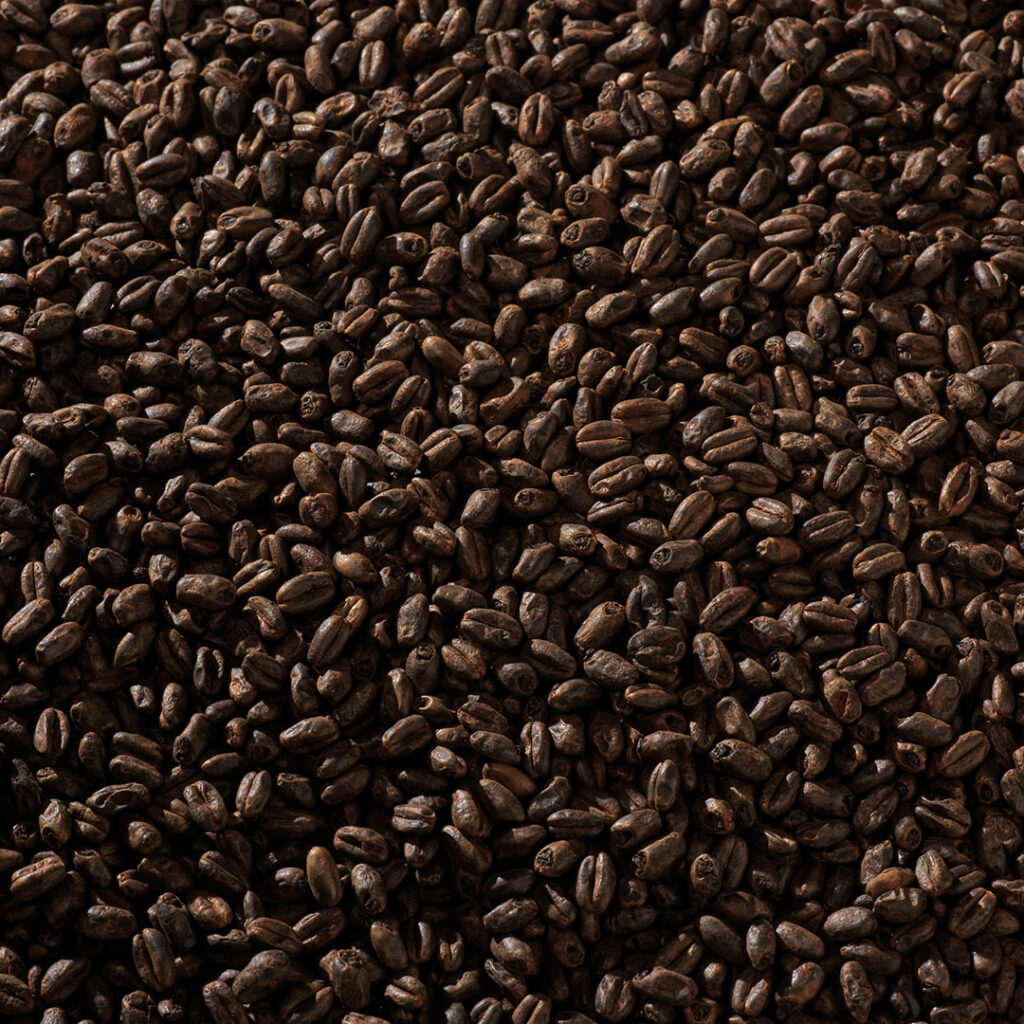
The simpler answer is to use a grain that has no husk to begin with: wheat. Black Swaen© Chocolate Wheat delivers the cocoa, smoothness, and depth of a chocolate malt without any contribution from a husk fraction at all. It is the natural choice for dark wheat beers, Schwarzbiers, and any dark beer on a lighter base malt where the brewer wants minimum astringency at near-black colours.
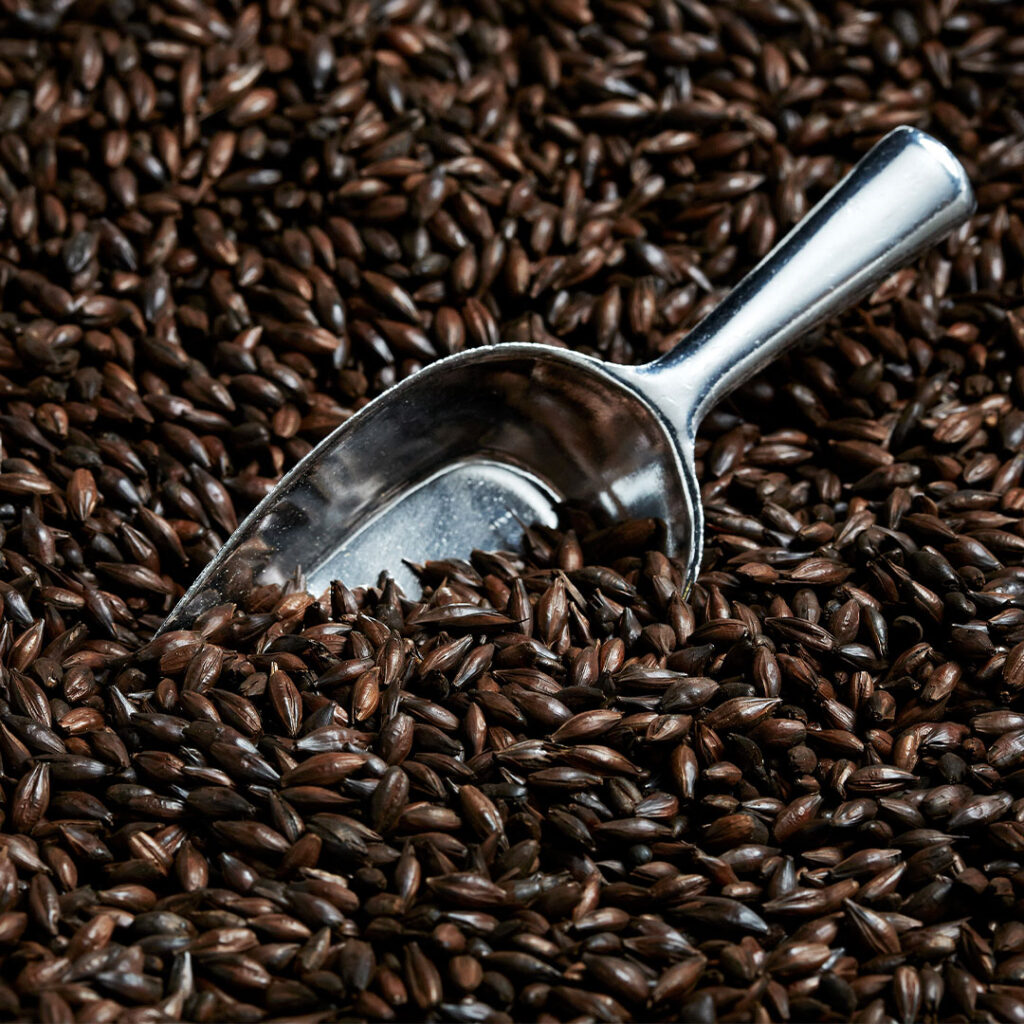
Black Swaen© Black Extra (EBC 1250–1400)
The deepest colour in the Black Swaen© range – what the brochure calls “the black diamond.” Black Swaen© Black Extra is the tool a brewer reaches for when the recipe needs that last 50–100 EBC of colour correction without committing more grain to the dark fraction of the grist. At 1–2%, it lands a pitch-black Porter or Stout at target colour with a clean, dry finish.
Because it is roasted on the Probat drum roaster with the same uniformity as the lighter Black Swaen© malts, the depth of colour does not bring with it the depth of harshness that brewers might expect from a malt at this end of the scale.
Black Swaen© Barley (EBC 1000–1250)
Unmalted barley, roasted directly in the Probat drum. Because the grain skips the malting step entirely, Black Swaen© Barley retains the full husk and the proteins and polyphenols that go with it. The result is a sharper, drier, more assertive character than any of the malted dark grains can produce. This is exactly what dry Irish Stout asks for – the cutting, dry roast edge that gives the style its definition is a Barley contribution, not a chocolate-malt contribution.
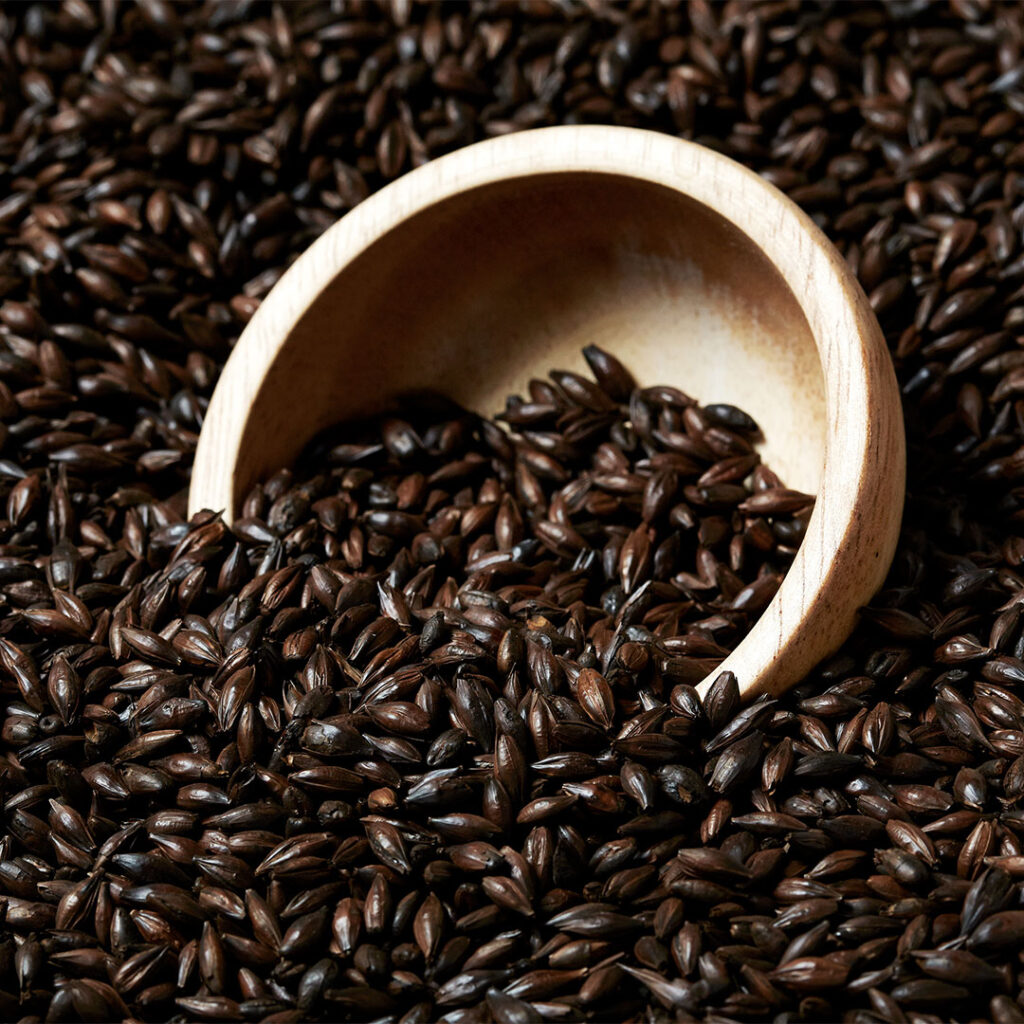
At 5–8% in a Dry Stout grist, Barley does the work that no other malt in the range can do. In Milk Stout, Schwarzbier, or anywhere the brewer wants the dark character softened, Barley is not the right answer.
Barley also has a distinctive effect on foam colour, and it is one of the visual signatures of the style. Unmalted roasted barley produces a paler, almost white-tan head – the creamy off-white foam that sits on top of a well-poured Irish stout. Roasted malted grain, by contrast, contributes more colour to the foam itself, producing a darker brown head. A brewer who wants the classic visual contrast of a near-black beer under a cream-coloured head builds it with unmalted Barley. A brewer who wants the foam to echo the colour of the beer reaches for the malted dark malts instead.
Kilned and caramelised support malts
Around these six roasted malts, a brewer building a layered roast grist will typically lean on Swaen© Melany (EBC 60–80) for a freshly-baked biscuit warmth, on Gold Swaen© Brown and Brown Supreme (EBC 200–320) for caramelised coffee and biscuit notes from the same Probat drum, and on Gold Swaen© Munich Dark (EBC 130–160) for body and structure. These are not the heroes of a dark beer recipe. They are the chassis the roasted malts sit on.
Four styles, four approaches
Robust Porter
A layered roast approach for a robust Porter (target: ~35 EBC, ~30 IBU from hops).
| Malt | Amount | Contribution |
| Swaen© Ale | 78% | Foundation. |
| Swaen© Melany | 8% | Warmth, biscuit. |
| Black Swaen© Chocolate B | 7% | Dark chocolate, coffee. |
| Gold Swaen© Brown | 5% | Earthy depth. |
| Black Swaen© Black Extra | 2% | Deepest colour, dry finish. |
This grist spreads the roast character across four points on the flavour spectrum. Chocolate B carries the dark flavour at a moderate rate; Black Extra delivers the final colour correction at 2%, low enough that even the deepest malt in our range contributes its colour without overcommitting on bitterness. The result is a layered, complex dark flavour with a rounded finish.
Schwarzbier
A Schwarzbier is a dark Lager with a misleading colour – near-black in the glass, but light in body and bitterness. The malt grist has to deliver the colour without the flavour intensity that colour implies. Wheat-based dark malts, with no husk to drive astringency, are the right tool.
| Malt | Amount | Contribution |
| Swaen© Pilsner | 80% | Clean, light base. |
| Swaen© Munich Light | 8% | Subtle malt warmth. |
| Black Swaen© Chocolate Wheat | 9% | Colour, soft cocoa, no husk. |
| Black Swaen© Black Extra | 3% | Final colour correction. |
Chocolate Wheat carries the colour and the gentle cocoa character. Because it is wheat-based, there is no husk fraction contributing tannin or astringency at all. A small addition of Black Extra finishes the colour profile. The bitterness contribution stays well within the style’s characteristic restraint.
Milk Stout / Sweet Stout
In a Milk Stout, the lactose addition creates sweetness and body, but it also amplifies any harsh roast note – sweetness makes bitterness more obvious, not less. The right answer is to lean on the softer, lighter end of the roasted range, where Honey Biscuit and Coffee carry the dark character.
| Malt | Amount | Contribution |
| Swaen© Ale | 70% | Foundation. |
| Black Swaen© Coffee | 9% | Soft chocolate, nutty, creamy. |
| Black Swaen© Honey Biscuit | 8% | Biscuit, honey, gentle sweetness. |
| Gold Swaen© Munich Dark | 8% | Caramel, body. |
| Gold Swaen© Brown | 5% | Earthy depth. |
No black malt. No roasted barley. The colour target lands around 50 EBC through Coffee and the caramelised support malts. Honey Biscuit – unique to The Swaen – softens the whole grist from below with its biscuit and honey aromatics, which sit naturally alongside the lactose sweetness rather than fighting it. This is a Milk Stout that reads creamy, not bitter.
Dry Irish Stout
Where Milk Stout asks for softness, Dry Irish stout asks for the opposite. The sharp, dry, cutting roast character that defines the style is not a defect – it is the point. And the malt that produces it is the unmalted one.
| Malt | Amount | Contribution |
| Swaen© Ale | 85% | Foundation. |
| Swaen© Melany | 6% | Light biscuit warmth. |
| Black Swaen© Barley | 7% | Sharp, dry, cutting roast edge. |
| Black Swaen© Black Extra | 2% | Colour completion. |
Black Swaen© Barley – unmalted barley roasted directly in the Probat drum, with the full husk intact – does the work that no other malt in the range can do. Used at 7% on a clean Ale base, it gives the beer the bone-dry, faintly acrid coffee character that defines an Irish Dry Stout. Black Extra at 2% completes the colour. The result is a beer that holds the style’s character honestly: roasty, dry, and finishing with the slight bitterness that the cask version has carried for two centuries.
Starting points for grist design
A few principles worth keeping when building a layered roast grist:
The 1000 EBC rule of thumb — flavour below, colour above
The simplest way to think about the Black Swaen© range is to draw a line at 1000 EBC. Below the line – Honey Biscuit, Coffee, Chocolate B, and Chocolate Wheat – sit the malts you use to build flavour layers at moderate inclusion rates. Above the line – Black Extra at 1250–1400 EBC and Barley at 1000–1250 EBC – sit the malts you use sparingly to land the final colour. Get the flavour layers right with the lower-EBC roasted malts; reach for the deeper malts only for the last 50–100 EBC of colour correction, typically at 1–3% of the grist. Honey Biscuit is the exception that proves the rule – it can carry both flavour and a small colour contribution because the roast level is so gentle.
Work from the colour target outward
Decide the EBC target first. Then allocate colour contribution across the malt selection, keeping each individual dark malt below the rate where its own character starts to dominate the beer. For Chocolate B, the recommended range is typically 3–6%. Black Extra usually requires only 1–3% to achieve the deepest colour correction. Unmalted Barley is commonly used at 5–8% in Dry Stouts, while lower levels suit most other styles.
Separate the colour work from the flavour work
Lighter roasted malts like Honey Biscuit and Coffee contribute primarily flavour. Black Extra contributes primarily colour. Using the lighter roasts for character and the deeper malts for colour correction – rather than asking one dark malt to do both – is the core logic of the layered roast approach.
Adjust for bitterness tolerance by style
Dry Irish Stout tolerates and in fact requires roast bitterness – that is what Black Swaen© Barley delivers. Schwarzbier and dark Lager do not – Chocolate Wheat is the better fit. Milk Stout sits in between but is pushed toward smoothness by the lactose, which is where Coffee and Honey Biscuit shine. Understand the style’s bitterness character before building the grist.
For minimum astringency, use wheat — not dehusked barley
Where the brewer wants near-black colour with the smallest possible astringency contribution, the answer in 2026 is Black Swaen© Chocolate Wheat. Wheat is naturally huskless; there is no tannin or husk fraction to remove because there is none to begin with. Dehusking was an older industry workaround for harsher dark malts from less precise roasting equipment – a problem the Probat drum roaster solves at source, and that wheat malt sidesteps entirely.
The harsh dark beer is usually the one where everything was asked of a single malt. The complex dark beer is the one where the grist was designed to let several malts each do a smaller part of the work – and where those smaller contributions, layered together, produce something that no single malt could have achieved on its own. With the Probat drum roaster handling the equipment side of the equation, and a Black Swaen© range chosen with Honey Biscuit, Coffee, Chocolate B, Chocolate Wheat, Black Extra, and unmalted Barley as the six stops along the curve, the brewer’s job is to design the layers. The malt is already built to layer well.
Not sure which Black Swaen© malt carries the flavour and which one lands the colour? Explore the full Black Swaen© range – or contact our team to talk through your grist.