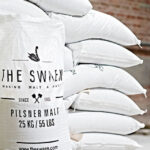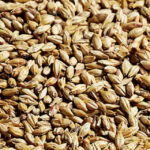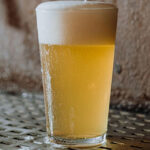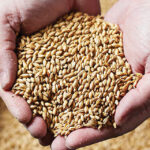

In modern brewing, body and foam stability are no longer by-products of a recipe – they are design parameters. As brewers push for greater drinkability, lower alcohol, and cleaner flavour profiles, one challenge keeps returning: how do you build body without adding colour, sweetness, or alcohol? Dextrin malt is one of the most precise tools available to solve that problem. That is why we used it in this Pilsner recipe.
What is dextrin malt – really?
Dextrin malt is often marketed under names such as CaraPils® or CaraFoam®. Despite these names, it is important to clarify Dextrin malt is not a caramel (crystal) malt. There is no caramelisation involved. Instead, its functionality comes from a carefully controlled stewing process. Green malt is held at enzymatic temperatures (>70°C). Starch converts into dextrins (long-chain, largely unfermentable carbohydrates). The malt is then gently dried, without entering caramelisation ranges.
The result is a malt with high dextrin content, very low colour, minimal flavour impact and low enzymatic activity – meaning it requires base malt. These dextrins largely survive fermentation and remain in the final beer, contributing directly to mouthfeel and viscosity, foam stability and head retention and perceived fullness without added sweetness. In practice, dextrin malt is not a flavour ingredient – it is a structural tool in recipe design.
What makes Platinum Swaen© Dextrin different?
At The Swaen, malting is not just production – it is process control. With Platinum Swaen© Dextrin, we focused on one clear objective: maximise dextrin formation inside the kernel, while minimising colour and flavour development. By optimizing stewing conditions and kernel conversion, we created a malt that delivers higher functional impact per kg, a cleaner, more neutral sensory profile and very low colour contribution. Ideal for pale beer styles. This aligns with how we see modern brewing. Functional malts should do exactly what you want – and nothing you don’t. Think of dextrin malt not as a flavour addition, but as a process tool in solid form.
How and when to use dextrin malt
Typical usage levels
- 3–5% → subtle improvement in foam and structure.
- 5–10% → clear increase in body and mouthfeel.
- 10–15% → ideal for low-alcohol or highly attenuated beers.
Key considerations
- No enzymatic power → always combine with base malt.
- Compatible with all mash regimes.
- Minimal impact on wort colour and flavour.
Grain bill
| Variety | Quantity | Quantity | Colour EBC | Colour ºL | Ratio |
|---|---|---|---|---|---|
| Swaen© Lager | 19.3 kg | 42.5 lb | 3 – 4 | 1.7 – 2.1 | 92% |
| Platinum Swaen© Dextrin | 1.7 kg | 3.7 lb | 3 – 6 | 1.7 – 2.8 | 8% |
This recipe demonstrates how dextrin malt can transform mouthfeel without changing flavour profile or colour. This combination delivers a clean, neutral malt base, high fermentability from the base malt and a structural reinforcement from the dextrin fraction. Single infusion: 66°C – 60 minutes, mash-out at 76°C. Higher mash temperatures combined with dextrin malt create a layered, more persistent body.
Hops
| Variety | Duration | IBU |
|---|---|---|
| Hallertau / Saaz | 60 min. | 15 |
| Hallertau / Saaz | 10 min. | 3 |
Keep bitterness supportive – the goal is balance, not dominance.
Yeast
| Variety | Fermentation |
|---|---|
| Clean lager strain (e.g. W34/70, WLP800) | 10–12°C |
The lagering for this Pilsner recipe should be 2–4 weeks at 0–2°C.
A beer that looks simple – but performs differently.
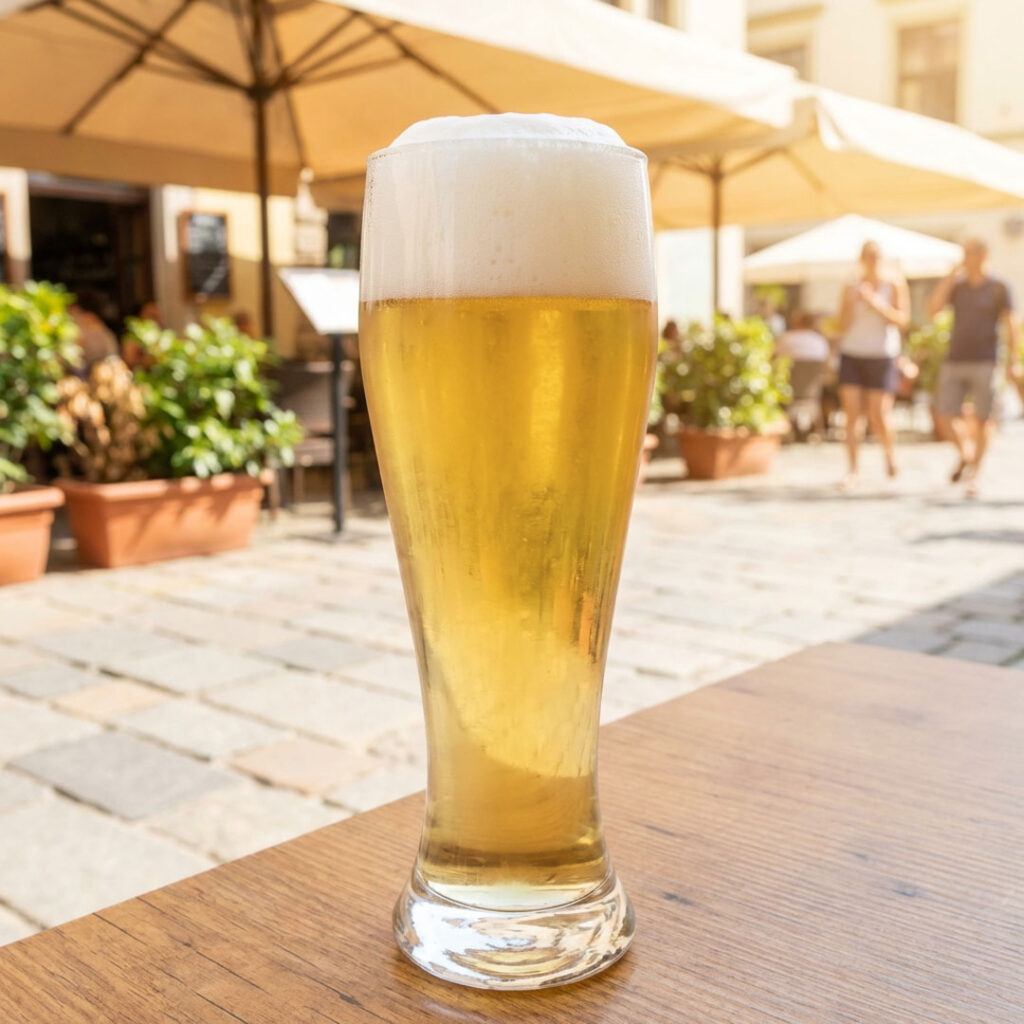
In the glass:
- Very pale colour.
- Clean malt profile.
- Crisp, classic lager fermentation.
On the palate:
- Noticeably fuller mouthfeel.
- Improved head retention and foam stability.
- A more rounded, structured finish.
This is where dextrin malt proves its value. Structure you feel — not flavour you taste.
Pilsner recipe results
| Batch size | 100 L / 26 gallon |
| Original gravity | 12.0 °P |
| Final gravity | ~2.8–3.0 °P |
| Colour EBC | ~4–5 |
| Colour Lovibond | ~2–2.4 |
| IBU | 18 |
| ABV % | ~5.0% |
Want to brew a Pilsner with more body and better foam stability – without adding colour, sweetness or alcohol? This recipe shows exactly how Platinum Swaen© Dextrin makes the difference. Contact our team for expert advice on your next brew.