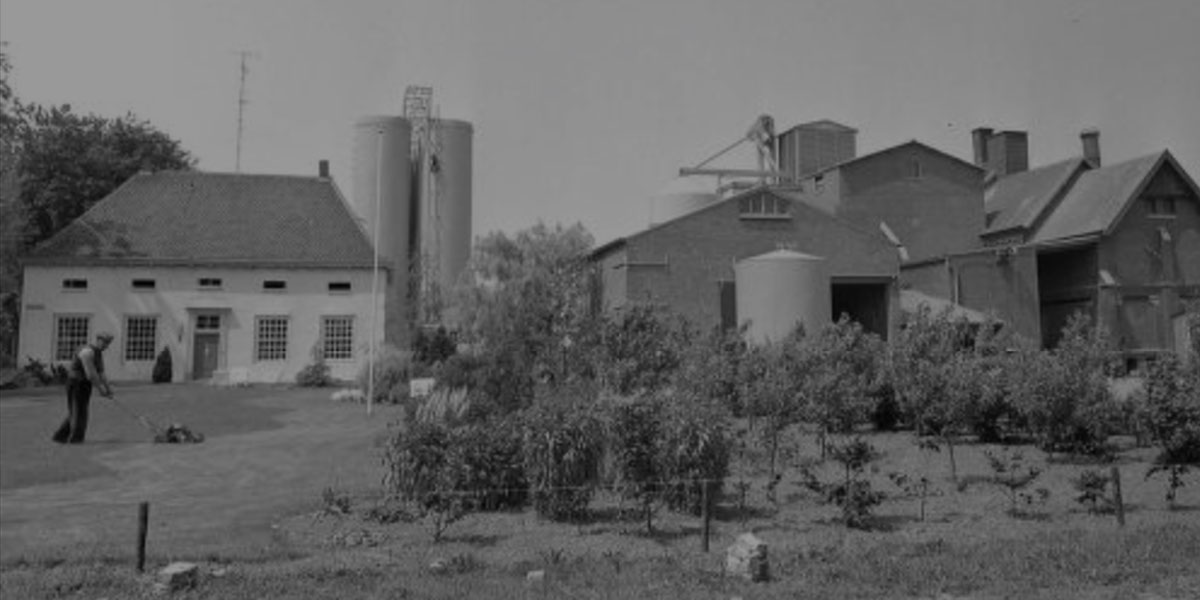
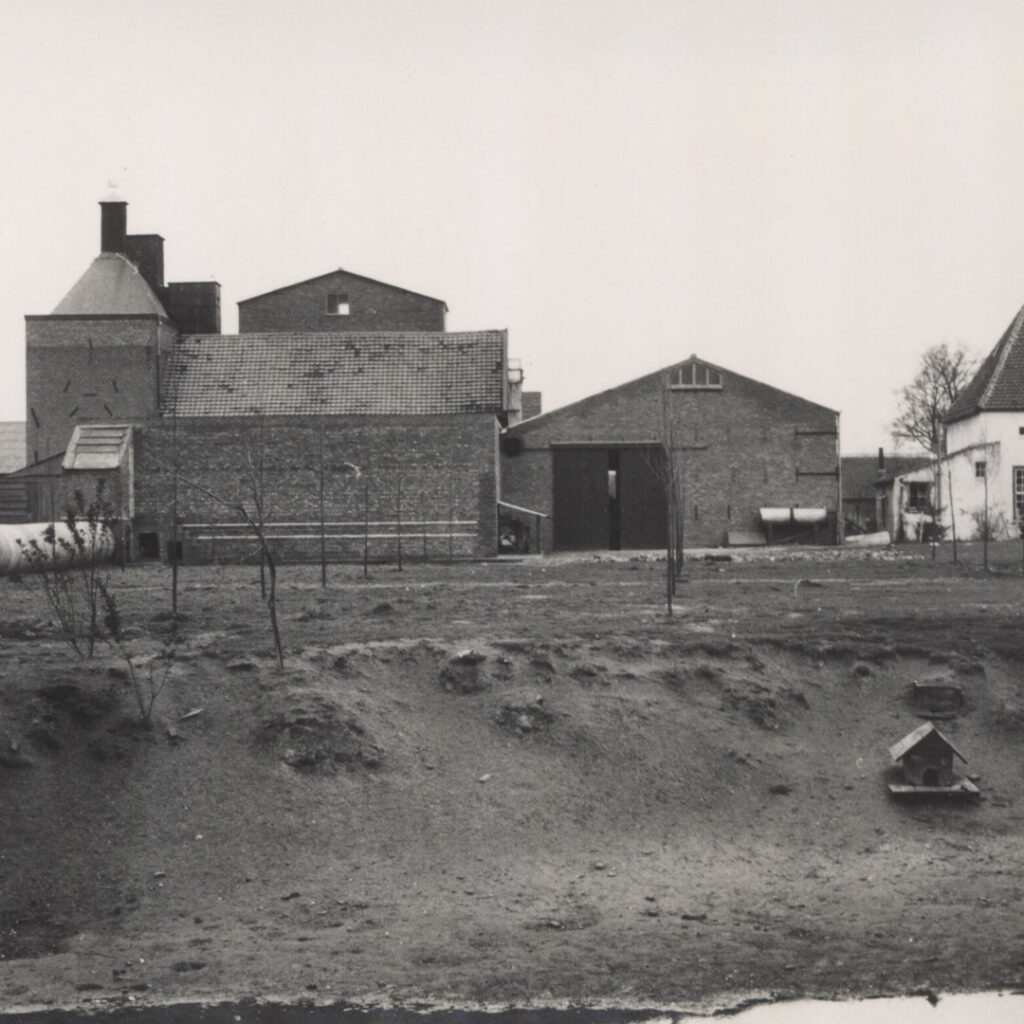
Brewery De Zwaan was built in 1906 by the family Buysrogge (who also had a coal trade and were inland waterway skippers) and Alois Adriaansens (who had a stone trade and his own mill). It was an average sized brewery that was well known in the region. Let’s have a look at life at brewery De Zwaan in 1906.
Bartering barley and beer in the beer cellar
In autumn – malting was more seasonal in those days – farmers visited De Zwaan with a knapsack full of barley. After drinking some beers in the beer cellar, business was concluded. At the time, quality control meant nothing more than looking at some kernels and smelling and chewing them. The latter was done to check the moisture.
If a deal was struck, the farmer would return with a farm cart with a few horses hitched to it. His head servant would have put the barley in 80-kilogram (about 175 lbs) bags. The farmer often arrived earlier by bicycle, so he could enjoy a beer before the activities started. One load consisted of twenty to twenty-five bags, resulting in a total of 1600 to 2000 kilogram (roughly 3500 to 4400 lbs). After these bags were stored, they celebrated their work. With a beer, of course.
From barley to malt: a hands-on process
The barley was stored in the attic, unless there was too much chaff. In that case, the barley was sent to the windmill. For steeping, they used a unique measurement. 365 shovels were added to one steeping session. This would have been around 600 kilogram (1300 lbs). If moisture levels were adequate, germination began. If you could easily squeeze it between your thumb and index finger, the time was right. The barley was placed on a malting floor, where it was manually turned twice a day with special malt shovels.
The maltsters wore clogs with rubber straps underneath. This was done to make sure the barley wasn’t crushed. After a few days – if the sprouts were deemed long enough – the germination was done. The barley was put back in bags. Workmen had to carry them up two floors to the kiln.
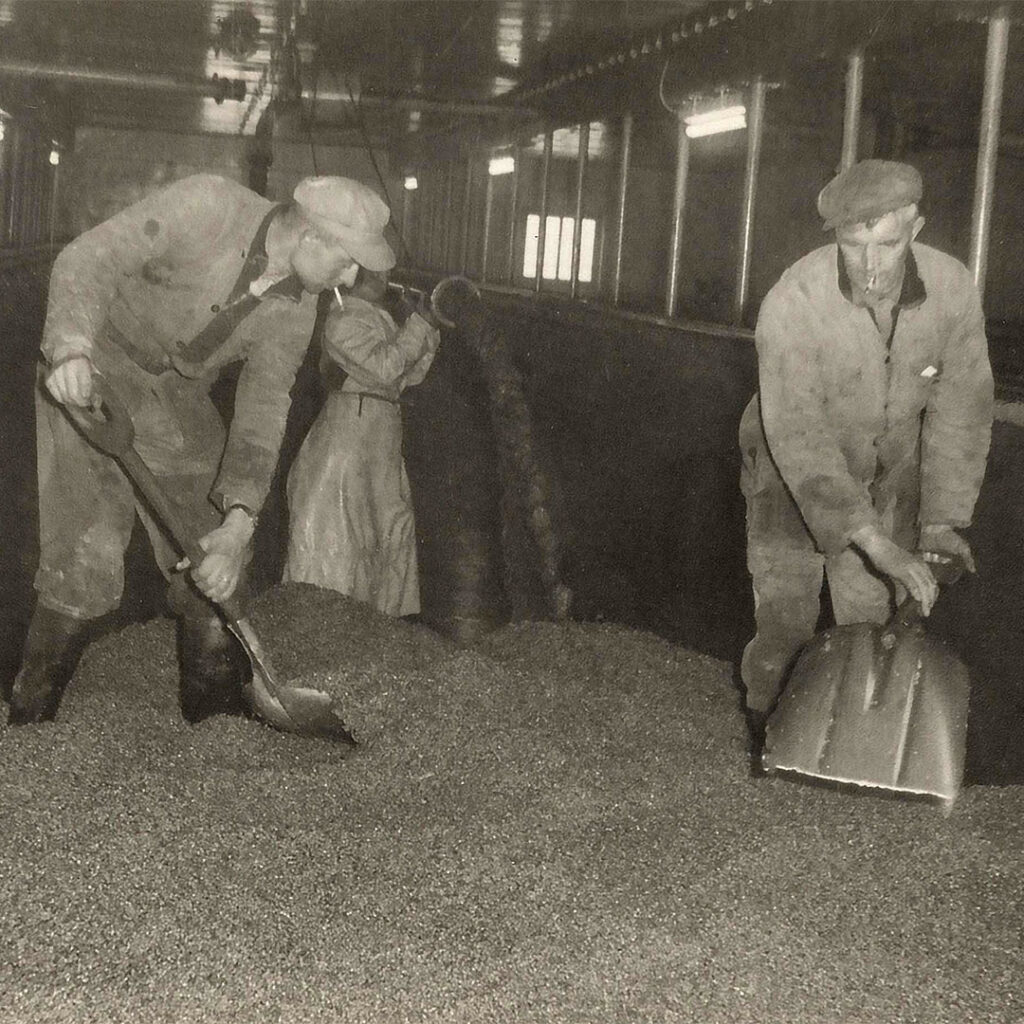
This kiln was a perforated floor that was warmed from below with cokes (high carbon coals). The barley had to be turned a few times – still manual labour back then. As a final step, the malt was put through a device that removed the sprouts. The final product was stored in silos.
Seasonal brewing and early mornings
As previously mentioned, malting was a seasonal business. It was only done from September until May. Of course, this had to do with the cooler temperatures needed for malting. Another reason was that beer consumption was lower in those months. De Zwaan was mainly a brewer, after all.
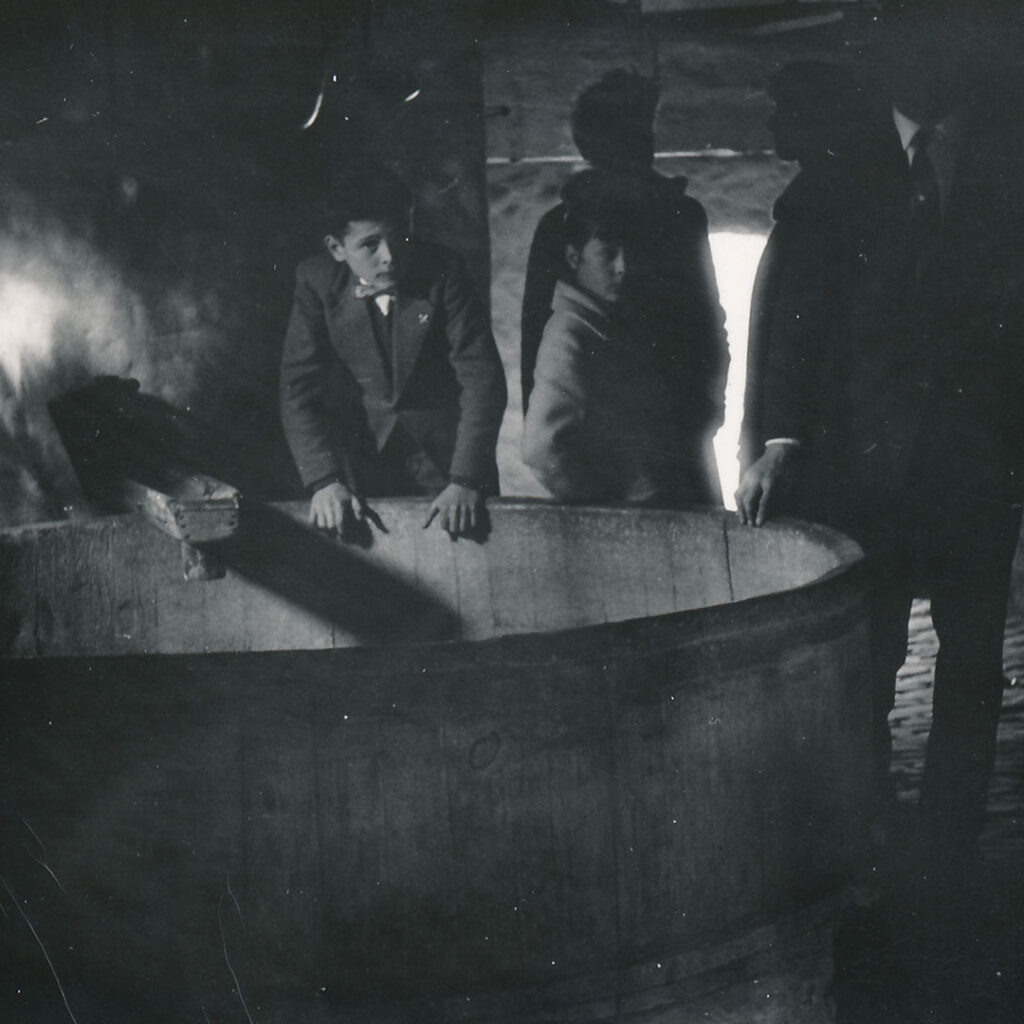
Before brewing started the brewer decided how much malt he would need. It was then crushed and dumped in the stirring tub. In the summer this was done two or three times a week, while in the winter one time sufficed. On the actual brewing days, sleeping in was out of the question. At four o’ clock in the morning the brewer had to start firing the cooking kettle. At around six, the water was warm enough and brewing could begin. It was added to stirring tub, where it was – once again manually – mixed with the malt.
From wort to barrel: traditional lagering and delivery
The tub was then closed with u huge wooden lid. It was time for the sugars to come out. The wort was carefully drained into a large tank. If it was approved (and without spent grain) the wort was transferred to the brewing kettle. Hop was added and the whole was boiled. Only after it was cooled to 18°C (64.4°F), the yeast was added. Then the beer was lagered in 800 litre (210 gallons) barrels.
After about eight days, fermentation was finished. It was filtered and carbonated, before being poured into oak barrels. There were three different sizes: an anchor (20 litre/5.3 gallons), half a barrel (40 litre/10.6 gallons) and a full barrel (70 litre/18.5 gallons). The barrels were then delivered to local taverns, cafés and farmers. From the late nineteen-twenties the beer was also bottled.
Life at brewery De Zwaan in 1906 paints a vivid picture of craftsmanship and community. Every step – from bartering barley to carrying heavy sacks up to the kiln – was done by hand, guided by experience rather than machines. The brewery was more than just a workplace; it was a lively meeting point where farmers, maltsters, and brewers came together over a shared love for good beer. Though times and techniques have evolved, the spirit of those early days still echoes in every batch we craft today – a tribute to the dedication and passion that built our foundations more than a century ago.